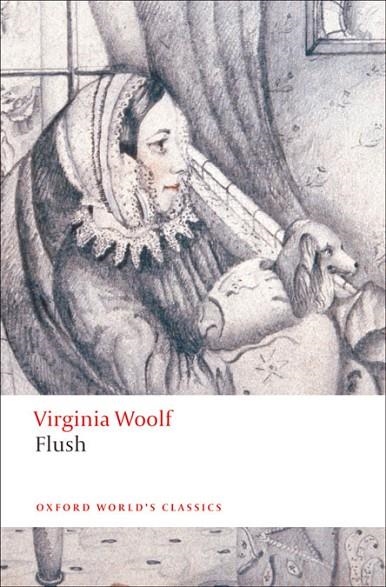
'I lay in the garden and red the Browning love letters, and the figure of their
dog made me laugh so I couldn't resist making him a Life.' Throughout her career
, Woolf invokes the animal world both directly and metaphorically. She started t
o write a biography of Elizabeth Barrett Browning's spaniel after finishing The
Waves, tracing the life of the spaniel from his country origins, his puppyhood s
pent with the writer Mary Mitford, through his sheltered existence with Elizabet
h Barrett in her sick room, and later travels in Florence. But Flush is much mor
e than a playful writer's holiday.
As well as offering an exploration of a li
fe of the senses free from the tyranny of words, Flush can be read as an allegor
ical testimony to the inscrutable, discarded, unrepresentable lives of the Victo
rian women poets, who were barely discussed or read in the 1930s. From a quite l
iterally low point of view, Woolf explores class and gender in Victorian London,
with gently mocking humour. Charming yet also radical, Flush is a work of sensu
ous imagination, an apparently light text that opens up a range of questions con
cerning difference which are woven through the whole of Woolf's writing.