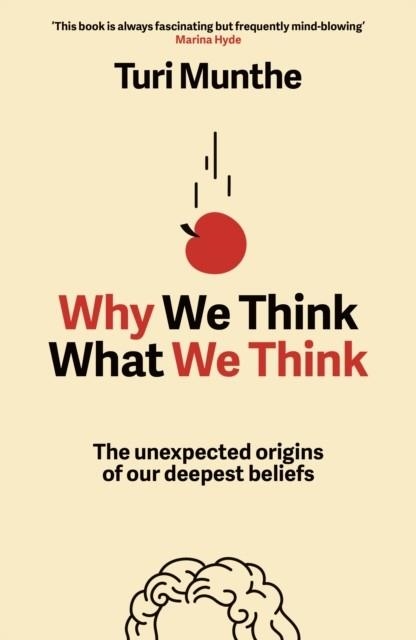
• WHY WE THINK WHAT WE THINK

    THE UNEXPECTED ORIGINS OF OUR DEEPEST BELIEFS

    TURI MUNTHE RANDOM HOUSE SQU 9781529153842 See other products of the same author
    'Lively [and] fascinating'Julian Baggini, Financial Times'This book is always fascinating but frequently mind-blowing'Marina Hyde, Guardian columnist and co-host of The Rest Is Entertainment'Fizzing with insights and ideas... I loved it'Jenny Kleeman, author of The Price of Life'Intriguing... Munthe...
    Measures: 241 x 164 x 35 cm Weight: 580 gr
    Available in 5-10 days
    32,05 €
  • Description

    • ISBN : 978-1-5291-5384-2
    • Binding : Hardback
    • Publication Date : 14/05/2026
    • Edition year : 2026
    • Author/s : TURI MUNTHE
    • Number of pages : 368
    'Lively [and] fascinating'Julian Baggini, Financial Times'This book is always fascinating but frequently mind-blowing'Marina Hyde, Guardian columnist and co-host of The Rest Is Entertainment'Fizzing with insights and ideas... I loved it'Jenny Kleeman, author of The Price of Life'Intriguing... Munthe explains why robust debate is essential for a creative and healthy society'Timothy Garton Ash, author of Free Speech and Guardian columnistAn eye-opening journey through the secret forces shaping our opinions, this book reveals why we think what we think – and why disagreement mattersOur opinions – whether we believe in God or in ghosts, our views on sex or animal rights or immigration, our basic sense of what’s good or fair – are shaped by a breathtaking web of hidden forces.

    The age-old idea that our views are forged by reason and evidence alone is wrong: we are influenced by everything from the quirks of distant history, through the geology of where we grew up, to the lines of our genetic code. This astounding book takes us through culture, biology, geography, history, psychology and much more to uncover the hidden DNA of our opinions. It reveals:why the descendants of rice farmers have different values to the descendants of grain farmershow our physical appearance shapes the way we see the world – and why conventionally attractive people tend to support the free marketwhy liberals think pineapple should go on pizza, and why conservatives prefer smooth peanut butter to crunchywhy hot and humid countries favour authoritarian leaders, and drought-prone ones prefer authoritarian godsPacked with extraordinary stories and counterintuitive discoveries, Why We Think What We Think asks a fundamental question of ourselves.

    If we are predisposed to our beliefs, how can we escape the bounds of our own perspective? The answer lies in disagreement. Argument is how we reason, how we think our way to a better world. To thrive, as individuals and societies, we need the other side.
Este sitio web almacena datos como cookies para habilitar la funcionalidad necesaria del sitio, incluidos análisis y personalización. Puede cambiar su configuración en cualquier momento o aceptar la configuración predeterminada.

cookies policy

Esenciales

Las cookies necesarias ayudan a hacer una página web utilizable activando funciones básicas como la navegación en la página y el acceso a áreas seguras de la página web. La página web no puede funcionar adecuadamente sin estas cookies.


Personalización

Las cookies de personalización permiten a la página web recordar información que cambia la forma en que la página se comporta o el aspecto que tiene, como su idioma preferido o la región en la que usted se encuentra.


Análisis

Las cookies estadísticas ayudan a los propietarios de páginas web a comprender cómo interactúan los visitantes con las páginas web reuniendo y proporcionando información de forma anónima.


Marketing

Las cookies de marketing se utilizan para rastrear a los visitantes en las páginas web. La intención es mostrar anuncios relevantes y atractivos para el usuario individual, y por lo tanto, más valiosos para los editores y terceros anunciantes.


Sign up for our newsletter

Join our mailing list and get the latest news and events!
I have read, understand and accept the privacy policy
Information on the processing of data